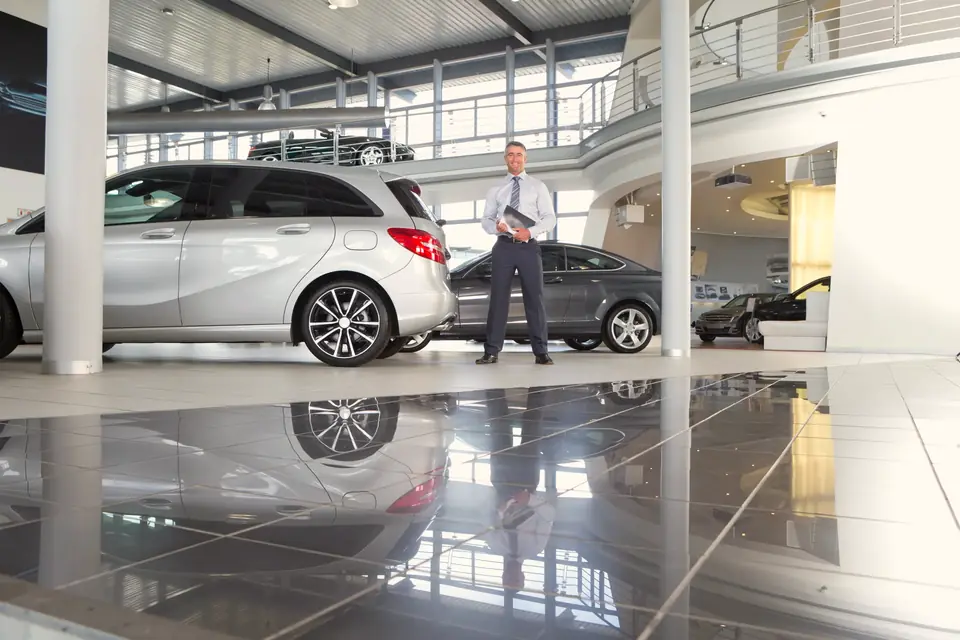
Showrooms and retail
High-gloss or metallic floors that make products look their best, with topcoats chosen to handle constant foot traffic and display moves.
Tell us about your floor
A few details are enough to start. We'll follow up to talk through the slab, the system options and a time to see the space.
Business floors have to look good to customers, survive constant traffic and fit around opening hours. We plan commercial projects around all three, with systems sized to the traffic your space actually sees.

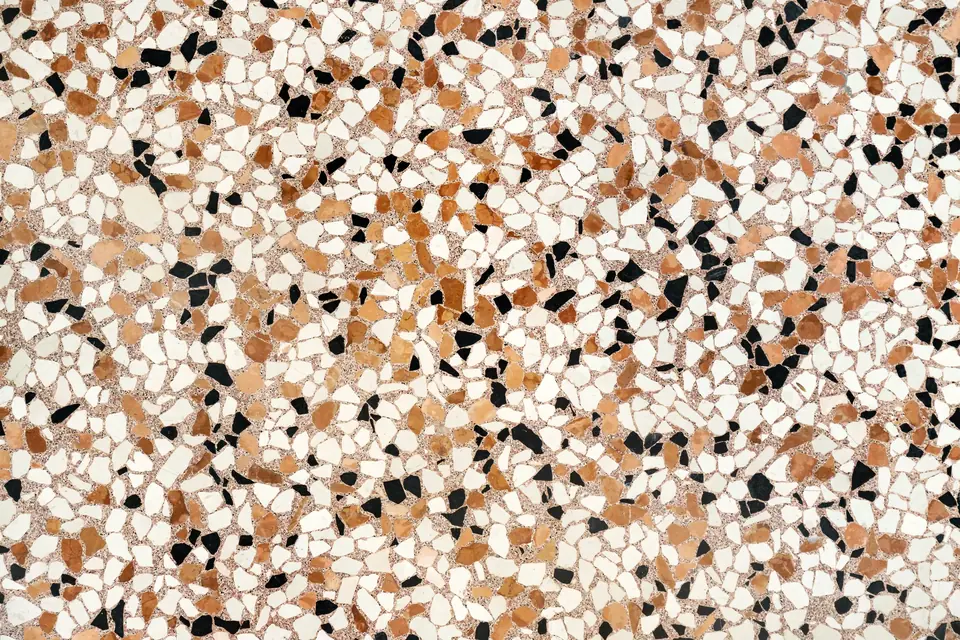
People notice floors more than they realize. A clean, bright, seamless floor tells a customer the space is cared for. A cracked, stained slab or a peeling coating says the opposite, even if everything else in the room is well done.
For a business, though, appearance is only part of the decision. The floor has to handle carts, chairs, foot traffic and cleaning crews. It needs to be safe when someone tracks in rain during a monsoon storm. And the installation itself cannot shut the business down for a week. Every commercial proposal we write addresses those questions along with color and finish.
Commercial spaces also vary much more than homes. A boutique, a dental office and a restaurant prep kitchen need different systems even if they are the same size. The sections below explain how we match the floor to the use.
High-gloss or metallic floors that make products look their best, with topcoats chosen to handle constant foot traffic and display moves.
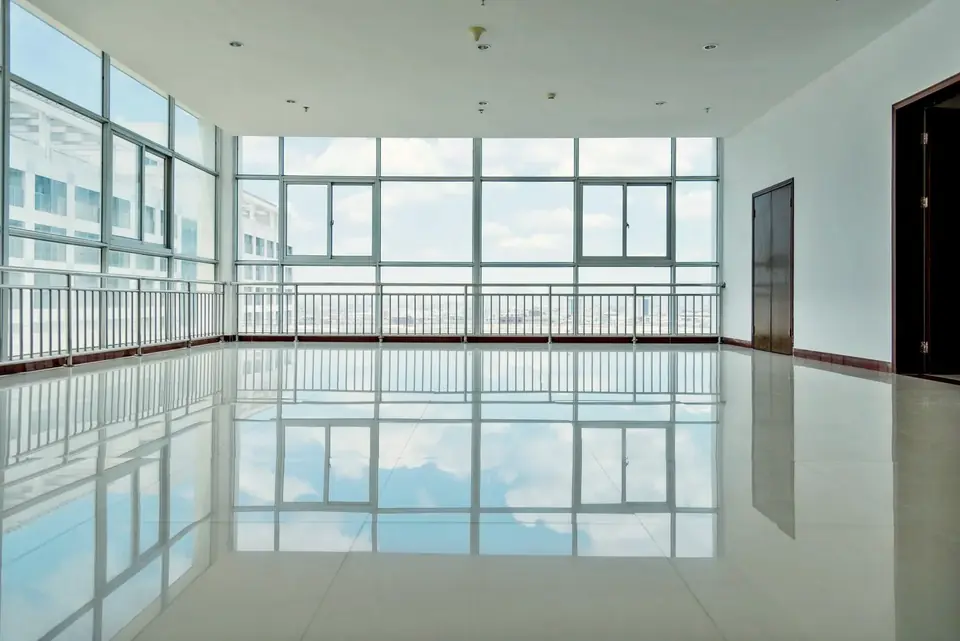
Satin solids and fine flake systems that suit modern workspaces and stand up to rolling chairs better than polished concrete or carpet.
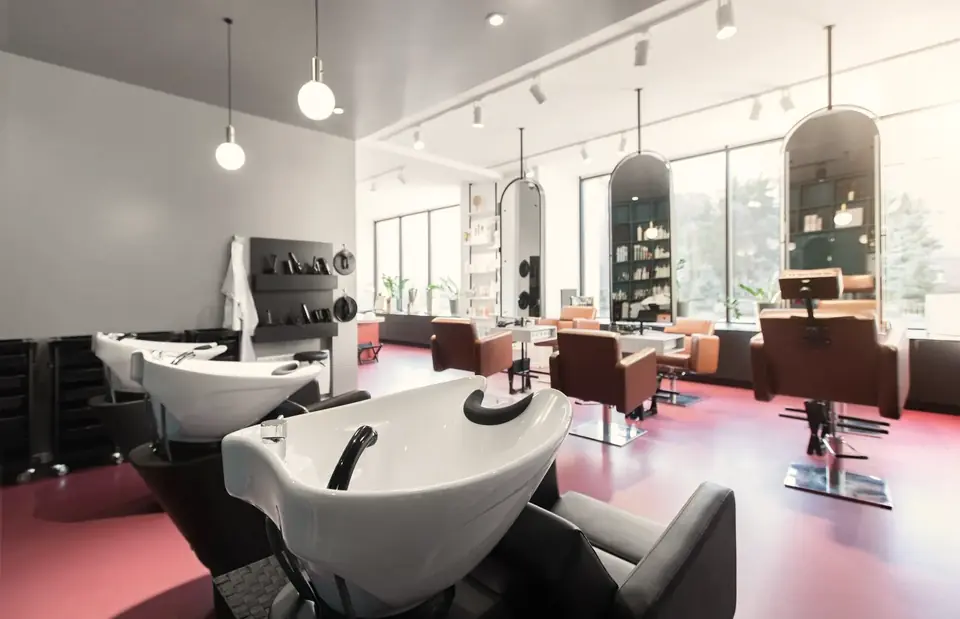
Seamless surfaces resist hair dye, chemicals and water, and color can be matched to the brand rather than settling for gray.
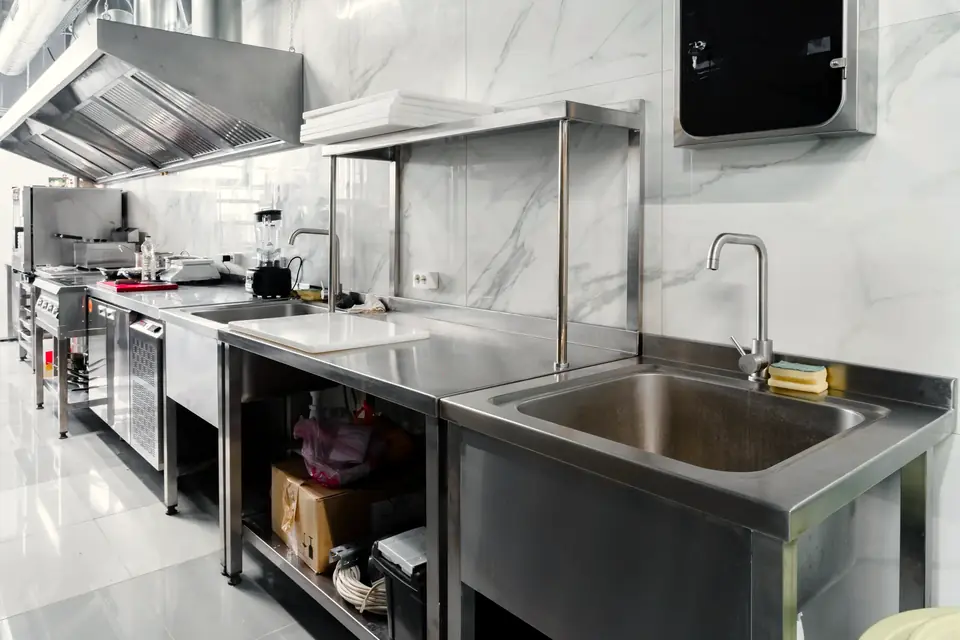
Back-of-house areas need slip resistance, thermal shock tolerance and cove base for sanitation. Urethane cement systems are often the right choice here.
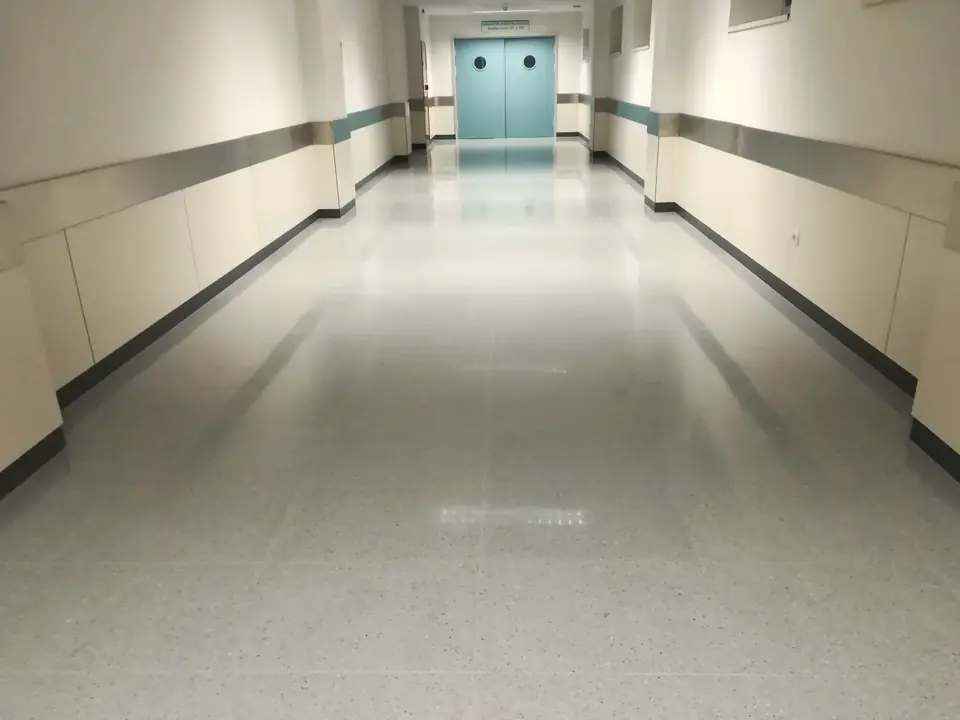
Seamless, cleanable floors with integral cove base help simplify cleaning protocols in exam rooms, corridors and utility areas.
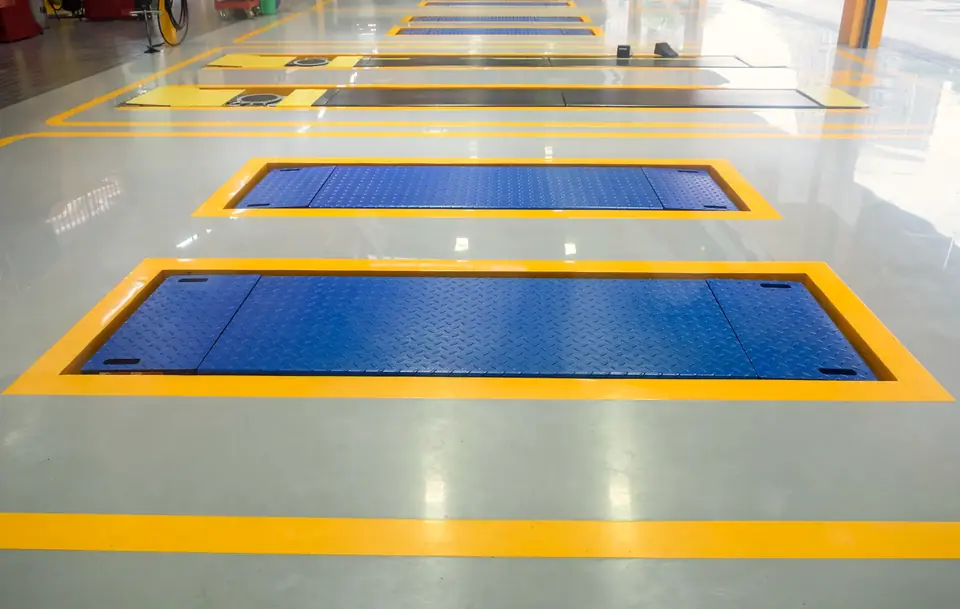
Chemical-resistant floors with bay striping and lift outlines that brighten work areas and clean up quickly after spills.
A rough guide to how we think about commercial floors. Final recommendations depend on the slab, chemicals and cleaning methods.
| Traffic level | Examples | Typical system | Notes |
|---|---|---|---|
| Light | Private offices, studios, galleries | Primer, solid or metallic body coat, urethane topcoat | Focus is on appearance and easy cleaning |
| Moderate | Retail floors, salons, clinics, showrooms | Multi-coat flake or quartz with polyaspartic or urethane top | Texture where water or spills are likely |
| Heavy | Service bays, back-of-house, loading areas | Thicker broadcast or troweled systems, chemical-resistant top | May need novolac or urethane cement in some areas |
| Wet and hot | Commercial kitchens, wash rooms | Urethane cement with cove base | Tolerates hot water washdown and thermal shock |
A rendered retail showroom shows how the same space reads with a worn slab versus a pearl metallic floor. The photo pair compares a raw office floor with a finished commercial space.
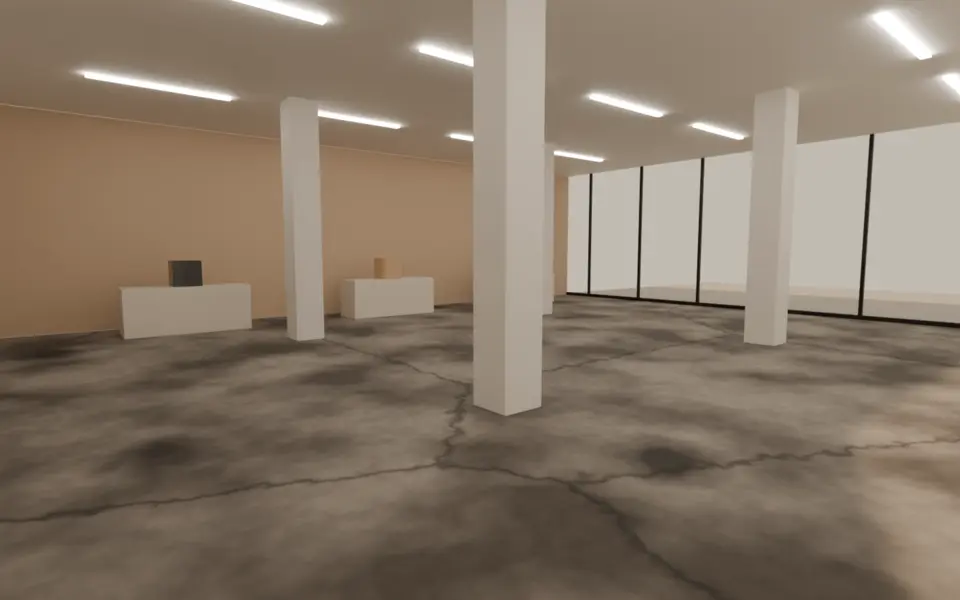
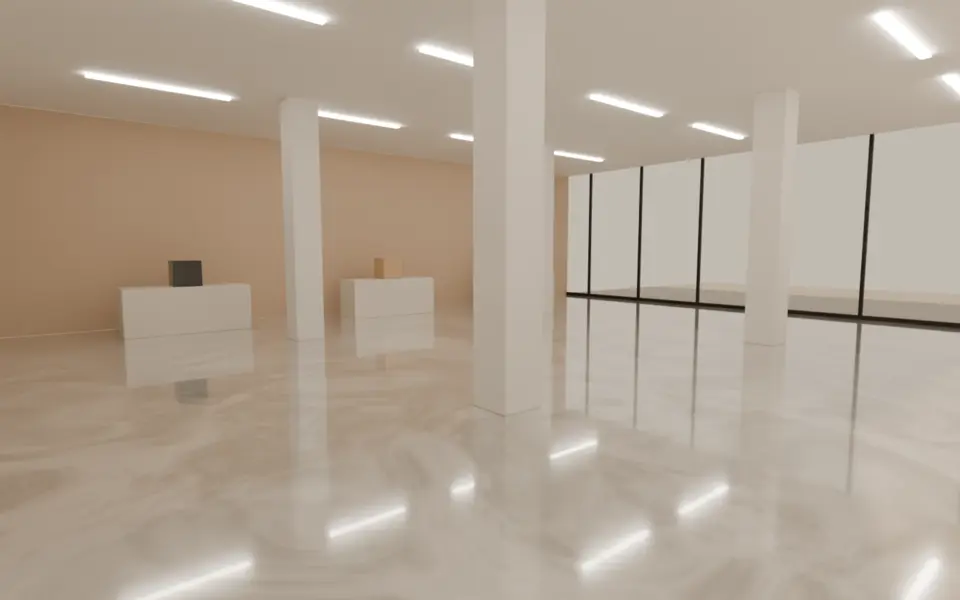
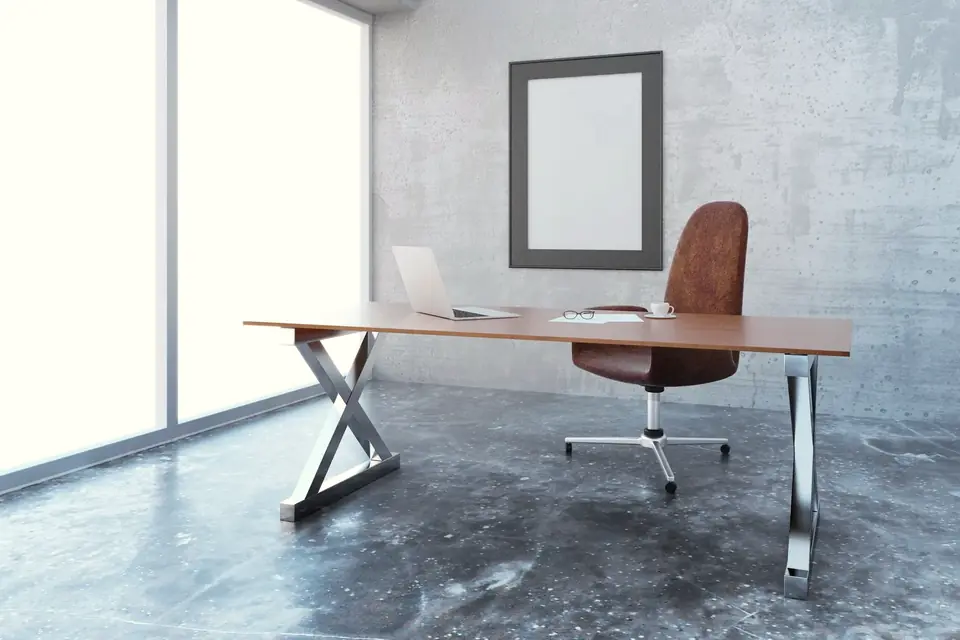 Before
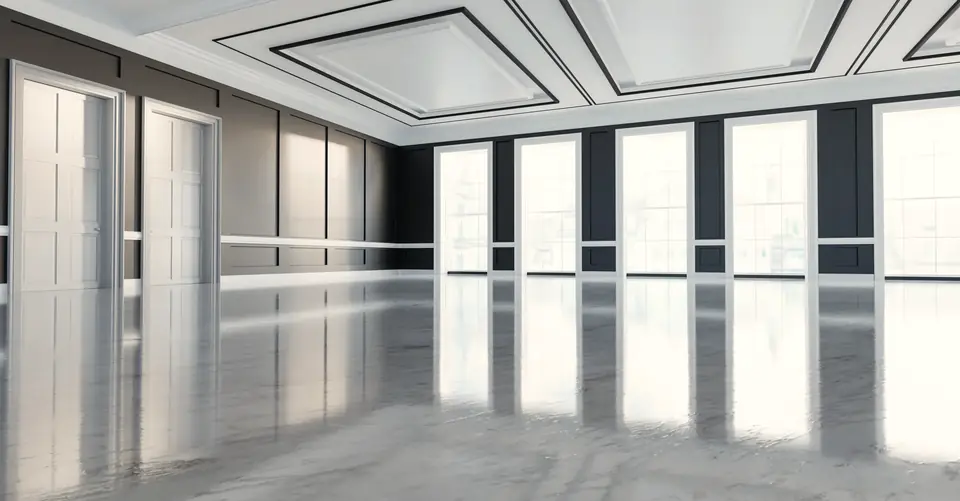 After
Comparison images are representative examples (licensed stock photography and rendered illustrations) and are not presented as completed projects of ours.
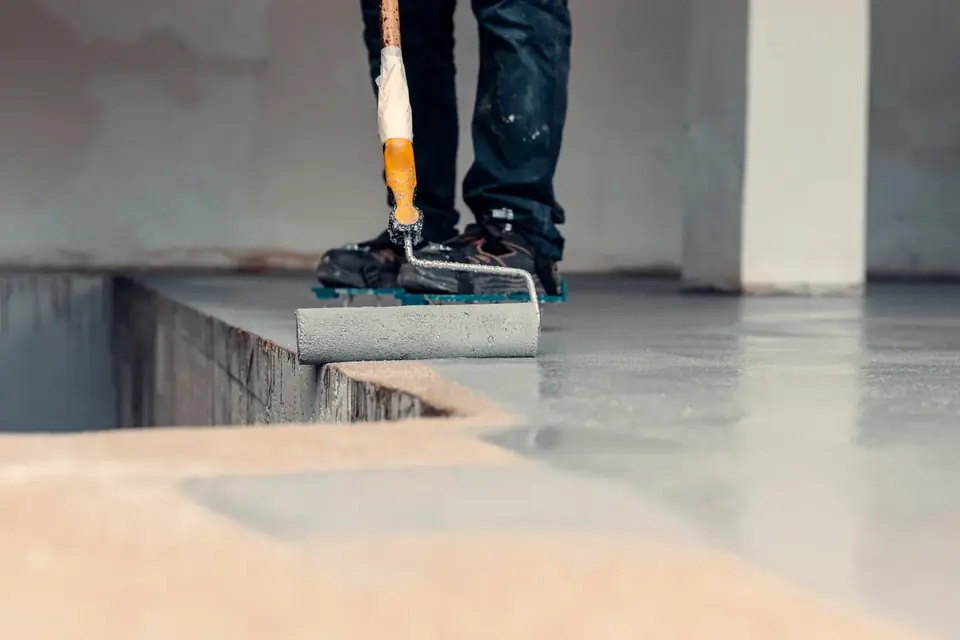
Downtime is the cost most businesses worry about. Where possible we phase large floors so part of the space stays open, and we schedule grinding and coating for evenings, weekends or planned closures.
Fast-curing chemistries help. Polyaspartic and some urethane systems can return to light traffic in hours rather than days. Where a slower epoxy is the better product, we plan around its cure rather than rushing it.
Before work begins, we agree on the sequence: which areas close first, where fixtures and inventory go, how dust and odor are controlled near occupied spaces, and when each zone will be ready to reopen.
Entries, restrooms, kitchens and anywhere water appears get aggregate in the topcoat. We will show you texture samples so you can feel the difference.
Ask your cleaning crew what they use. Some degreasers and disinfectants are harder on finishes than others, and the topcoat should be chosen with them in mind.
Integral cove base carries the floor a few inches up the wall, which removes the crack where dirt and water collect.
Larger commercial slabs have joints that need to keep working. They are filled with flexible material rather than buried under rigid coating.
Solid colors can be matched to brand palettes, and simple logos or zone markings can be laid into the floor.
Storage rooms and warehouses without air conditioning can see extreme slab temperatures, which changes both product choice and the time of day we install.
You do not need all of this to start. The more we know, the tighter the estimate.
Most business owners weighing a resinous floor are also looking at polished concrete, luxury vinyl tile, porcelain tile or commercial carpet. Each has a place. Polished concrete can be economical and low-maintenance on a slab in excellent condition, but it shows every patch, crack and stain from the life of the building, and it does not resist chemicals the way a coating does. Vinyl tile installs quickly and comes in many looks, but its seams collect dirt and it can be gouged by carts and chair legs. Tile is durable and attractive, though grout lines need ongoing cleaning and broken tiles are noticeable.
A coated floor sits somewhere in the middle. It is seamless, so there is nowhere for dirt or water to settle. It can be patched in place, recoated without removal, and colored to suit a brand. Its weaknesses are mainly about preparation and selection: the wrong system in the wrong space can wear quickly, and a poorly prepared slab can delaminate. That is why our proposals spend as much time on the slab and the traffic as on the color.
For tenant spaces, it is also worth asking what happens when the lease ends. Some landlords prefer a coated floor that can be left in place; others require a return to bare concrete. Knowing that early affects what we recommend.
It depends on size, system and how much prep the slab needs. Small spaces with fast-cure systems can sometimes be done over a weekend. Larger floors are usually phased so the business keeps operating. We will lay out the schedule in the proposal.
In most cases the tile and its adhesive need to come off so the coating bonds to concrete. Coating over VCT tends to fail at the tile joints. We can handle removal as part of the job.
For hot, wet, greasy kitchens, urethane cement is usually the strongest choice because it handles thermal shock from hot water and steam better than standard epoxy. Dining rooms and front-of-house areas often use a decorative epoxy or flake system instead.
Yes. Metallic epoxy is popular in showrooms, salons, lobbies and boutiques. It needs a protective topcoat suited to commercial traffic and occasional recoating in the busiest walkways.
Yes. Lines, walkways, bay outlines and directional markings can be laid into the system with durable coatings rather than paint or tape that wears off quickly.
Work areas are sealed off with plastic barriers, grinding is done with HEPA-filtered dust extraction, and we choose low-odor products where the system allows. For sensitive spaces such as clinics or food service, we schedule the dustiest and smelliest steps outside business hours.
Solid-color systems can be tinted to closely match most brand colors, and accent colors can be used for borders, logos or zone markings. We apply a sample on site so you can approve the color under your own lighting before the full floor is coated.
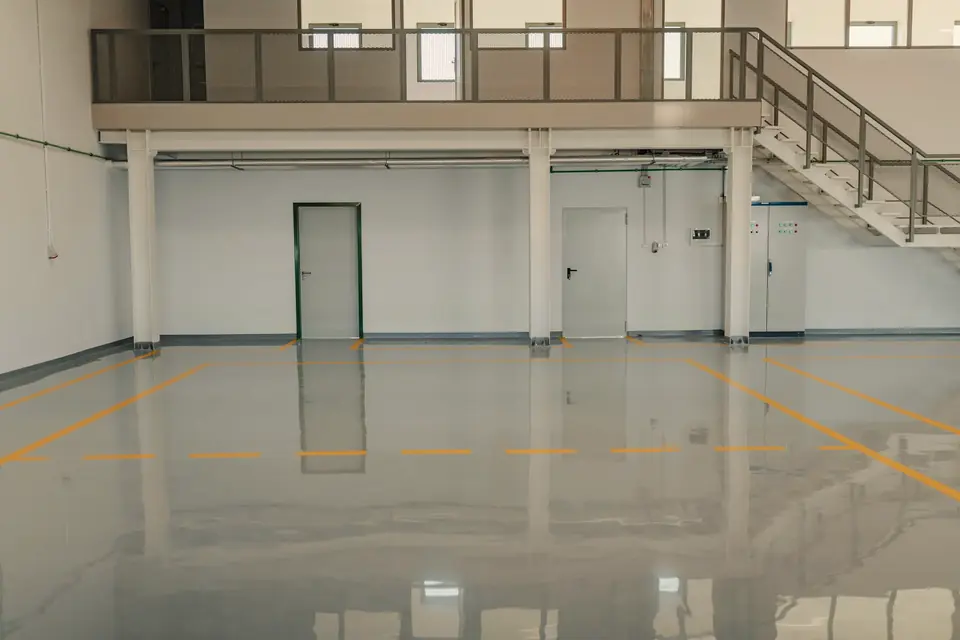
Heavy-duty systems for manufacturing, fleet maintenance, hangars and plants.

Hand-worked metallic floors in bronzes, pearls and charcoals.
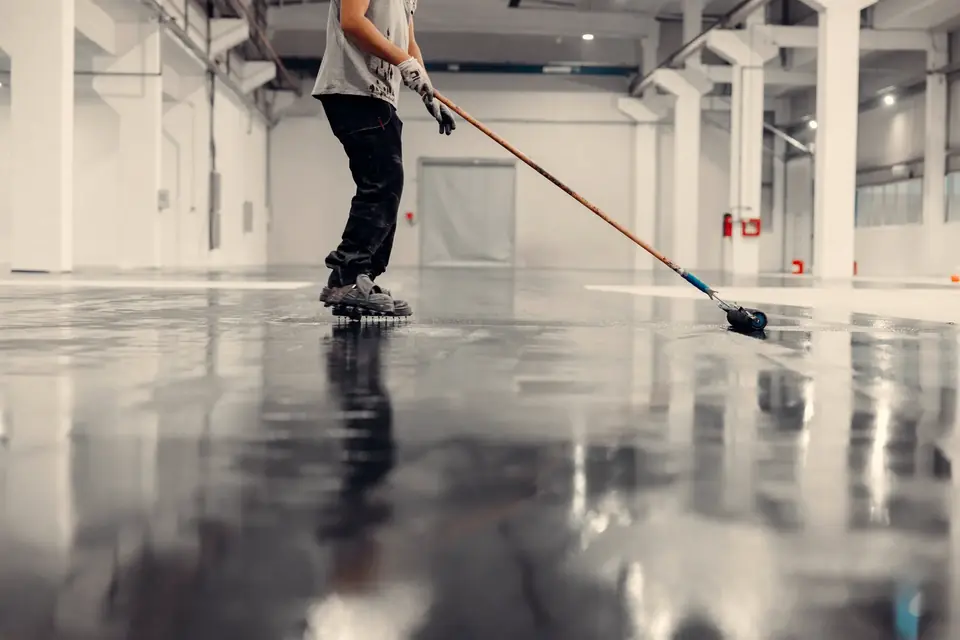
Fast-curing, UV-stable coatings and one-day garage systems.
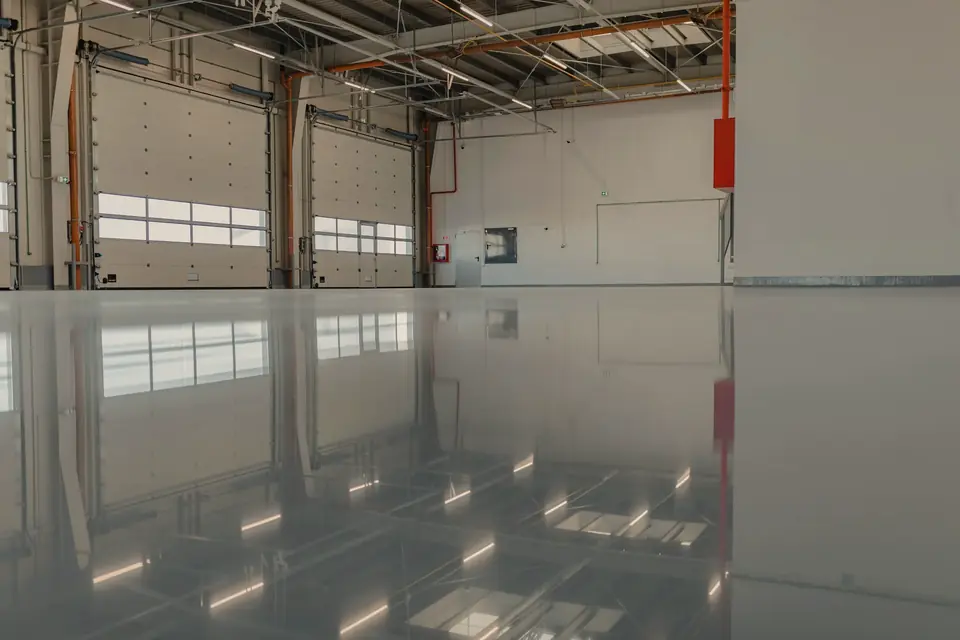
Dust-proofing, forklift-rated coatings, joint repair and aisle striping.
Tell us about the space, your hours and the traffic it sees. We will visit, look at the slab and propose a system and a schedule that fits around your business.
Prefer to talk? Call (XXX) XXX-XXXX